Compare the mechanism
Start with gas supply, bottle attachment and the space needed to use the machine. Those details determine the routine long after the finish stops feeling new.
Document-led guidance · No hands-on testingA home carbonator is a small pressure system, not simply a countertop dispenser. The right choice depends on how you obtain gas, which liquids the manufacturer permits, how the bottle attaches and how easily the household can repeat the operating steps. An attractive specification can still be a poor match if the nearest compatible exchange service is inconvenient.
Build a shortlist around your actual weekly use. A household making one bottle at dinner has different storage needs from one filling several bottles each morning. Count the bottles you want chilled, the space available in the refrigerator and the time you are willing to spend managing refills. Do not assume the largest advertised cylinder yield settles any of those questions.
Manual and powered controls
Many manual machines use the pressure in the cylinder rather than an electrical pump to carbonate water. A lever or button controls delivery. That can remove the need for an outlet, but it does not make all manual machines mechanically equivalent. Some require repeated presses; others use a different valve arrangement or a specific hold-and-release sequence.
Powered models may offer programmed doses or preset carbonation levels. Those controls can simplify repeated preparation, but a preset is not a universal measurement of dissolved carbon dioxide. Water temperature, fill level and cylinder condition still matter. Verify whether a particular model needs electricity for carbonation itself, for dispensing or only for additional features.
| Feature | Question to verify | Ownership consequence |
|---|---|---|
| Manual control | What exact press, hold and release sequence is required? | Determines the daily operating routine. |
| Powered dosing | Does the model need an outlet and offer adjustable settings? | Affects placement and repeatability of the procedure. |
| Bottle attachment | Does the bottle screw, click or sit inside a chamber? | Changes clearance, handling and compatible replacements. |
| Pressure release | How does the manual say to vent before removal? | Controls safe handling and the likelihood of spills. |
Treat the cylinder as a supply chain
Threaded and quick-connect systems are not interchangeable categories. Even a cylinder that appears to fit should not be used unless the machine manufacturer approves that exact connection and specification. Check the manual, the cylinder label and the exchange provider’s acceptance rules together. A retailer stocking a brand does not necessarily exchange every cylinder sold under that name.
Real market references include SodaStream, Aarke, Drinkmate, Philips and BRITA equipment, but these names are not compatibility standards. Models within a brand can differ. Aarke Carbonator models, for example, should be checked by exact model designation rather than treated as a single set of instructions. Likewise, do not carry assumptions from a SodaStream TERRA listing to another machine with a different bottle or cylinder arrangement.
Before buying, find out whether your practical route is an in-store exchange, a delivered exchange or another manufacturer-approved service. Ask about empty-cylinder returns, deposits, stock availability and delivery charges. A spare cylinder can reduce interruptions, but it also ties up money and needs suitable storage. Keep cylinders away from heat, follow their labels and do not improvise refill or adapter arrangements.
An exchange you can actually make is more useful than a refill price you cannot access.
Measure the operating envelope
Published width and depth describe only part of the space a machine uses. A bottle may need to tilt forwards or lift into a housing. A top lever may need clearance beneath a wall cabinet. Cylinder replacement may require moving the entire unit, opening a rear panel or accessing the base. Measure those movements, not just the resting footprint.
Also consider the surface underneath. A stable, level counter is preferable to a shelf that flexes during operation. Read any restrictions on wall proximity and ventilation. If you plan to put the machine away between uses, consider its fully assembled weight and the chance that moving it will make the routine less appealing.
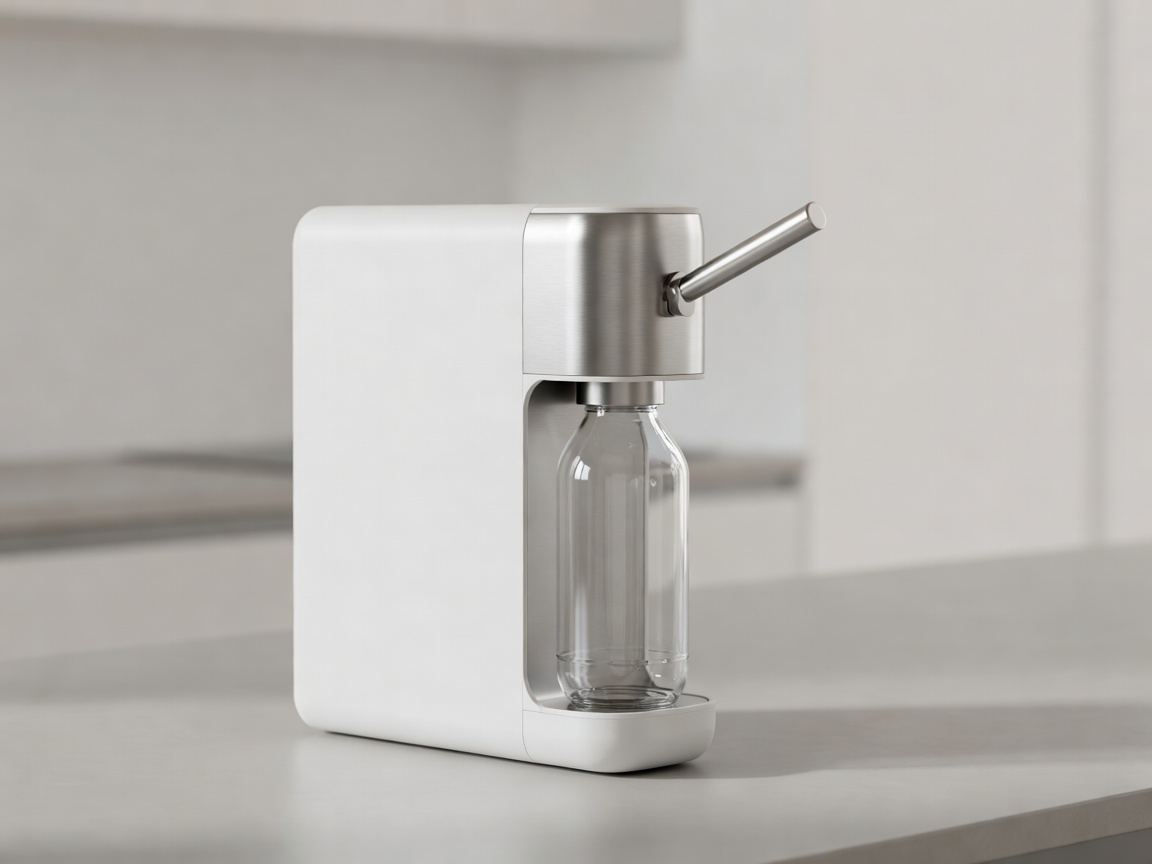
Water-only means water-only
Unless a model explicitly permits other liquids, carbonate plain water only. Add compatible flavourings after carbonation and pressure release, following the instructions. Juice, wine and sweetened drinks can foam differently and may contaminate parts that are not designed to be cleaned that way. Approval for other drinks on one machine does not transfer to another.
For a system expressly designed for additional liquids, read the limits on pulp, temperature, alcohol content and cleaning. A removable pressure-release assembly may create useful flexibility but also another component to inspect and maintain. Compare that extra work with what you actually want to make, rather than paying for a category of drinks you rarely prepare.
A defensible shortlist
Save the current instruction manual for each shortlisted model. Record the cylinder connection, approved bottle code, permitted liquids, cleaning instructions and replacement-part route. If a retailer’s description conflicts with the manual, ask the manufacturer before purchase. These are specification checks, not evidence that one model carbonates better than another.
Our conclusion is deliberately conditional: choose the system whose supply route, handling steps and care requirements match your household. For the next stage, check bottle compatibility and put the same usage assumptions into the running-cost ledger. Product-specific performance rankings would require evidence that this guide does not claim to provide.